Reducing customer churn
Right sizing
Designing a personalized recommendation experience to help high-risk customers identify savings and better align their plans with their needs.
Overview
Role
Product / Experience Designer
Timeline
August – October 2025
Team
Product Manager, Engineering, Content Strategist
Designing a personalized plan recommendation experience to reduce churn
Verizon’s plan-change team set out to reduce churn among customers with a high likelihood of leaving. Research from the Consumer Market Insights team identified monthly cost as the primary driver. In response, the team developed Right Sizing, a personalized recommendation system that analyzed each customer’s account and suggested plan and perk changes intended to lower their bill.
Project approach
01
Identify churn signals
The backend evaluated each account using churn likelihood, CX score, the customer’s primary risk driver, and current account state.
02
Generate a recommendation
Combined a plan adjustment, perk changes, and a plain-language explanation tailored to the customer’s account.
03
Simplify the journey
Reduced the standard self-directed plan-change journey to three steps.
04
Apply familiar patterns
Used established Verizon patterns to communicate removals, savings, and account changes.
05
Standardize the messaging
Partnered with Content to create a reasoning framework that kept recommendation explanations consistent.
06
Launch and learn
Released the experience to a limited audience and used the findings to inform the next initiative.
The problem
Addressing price-driven churn with personalized recommendations
Internal research identified monthly cost as the primary driver of churn. The team’s hypothesis was that identifying at-risk customers early and presenting a concrete savings opportunity could reduce the likelihood of cancellation.
The backend evaluated each account using churn likelihood, CX score, the customer’s primary risk driver, and their current account state. It then generated a recommendation combining a plan adjustment, perk changes, and a plain-language explanation of why those changes were recommended.
The recommendation logic was already defined when I joined the project. My responsibility was to integrate it into the existing plan-change journey, simplify the interaction around a system-generated recommendation, and ensure the experience felt consistent with the rest of Verizon’s product.
Core experience
Reducing the plan-change journey to three steps
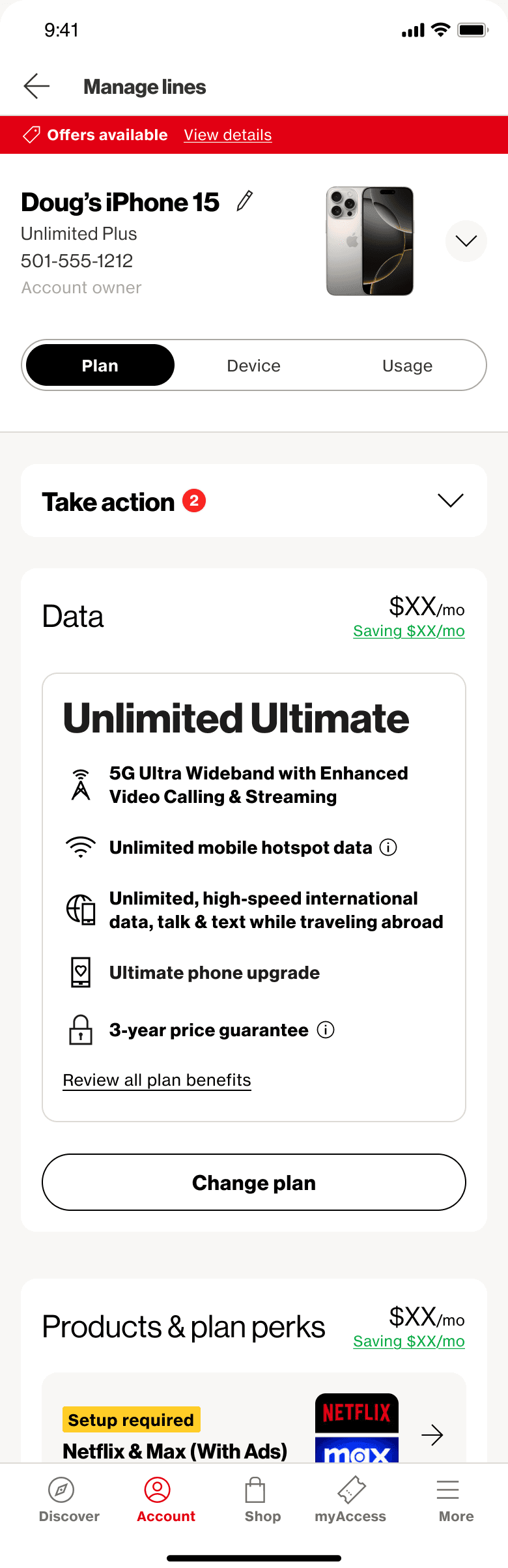
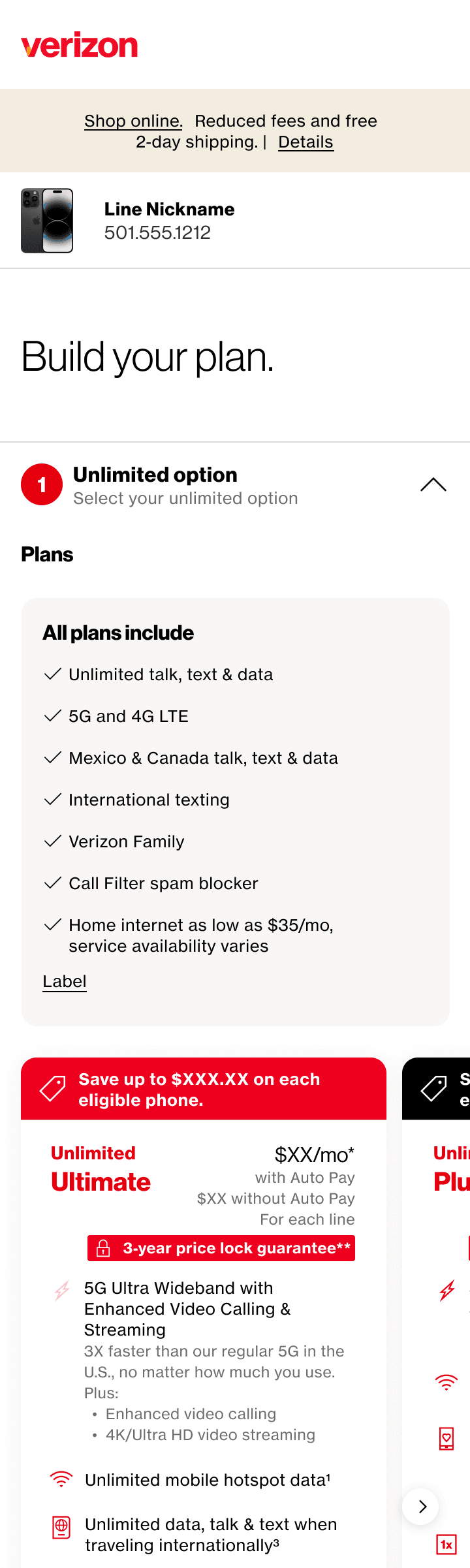
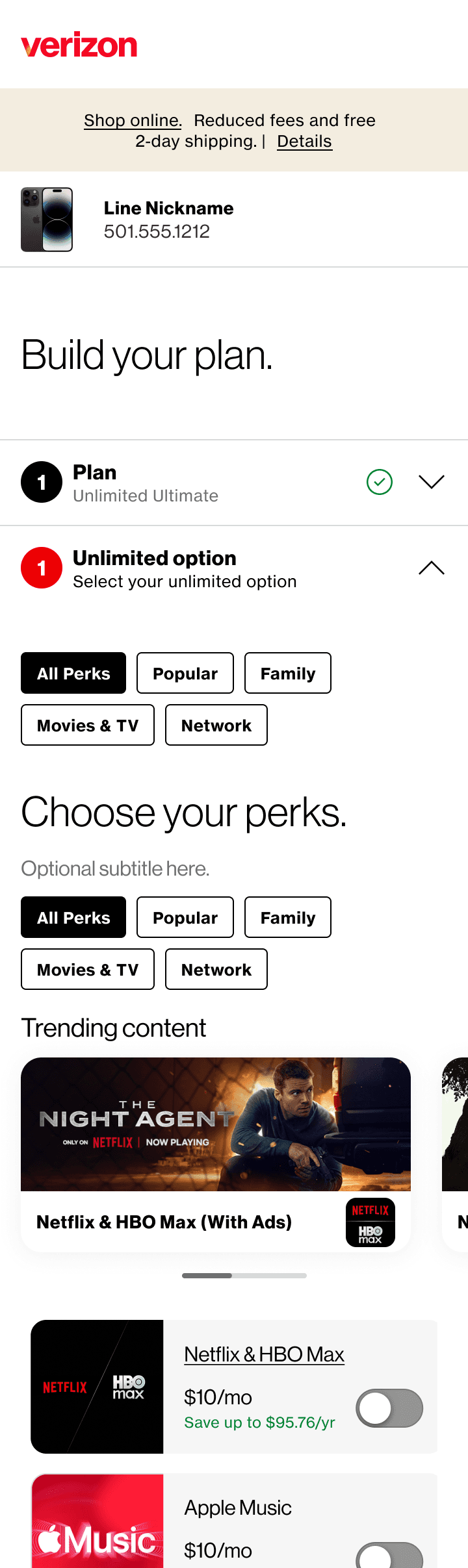
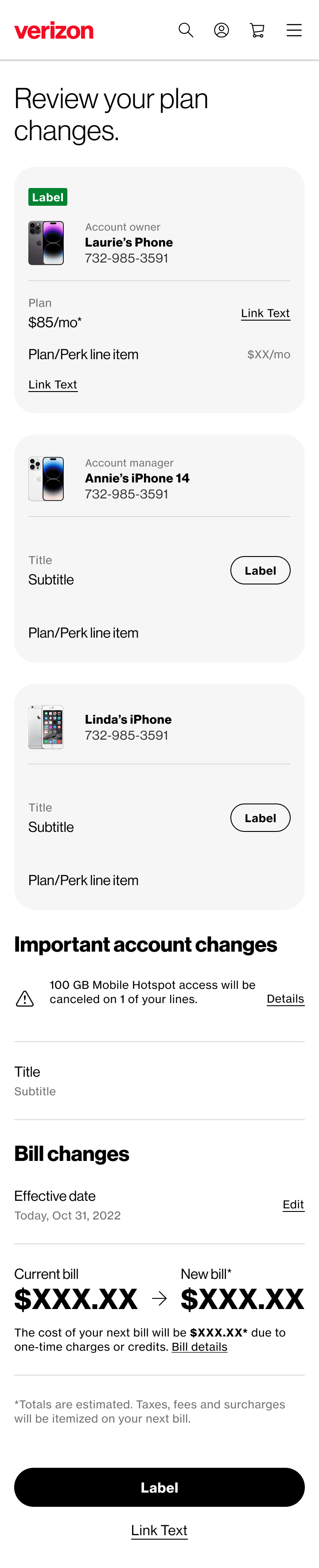
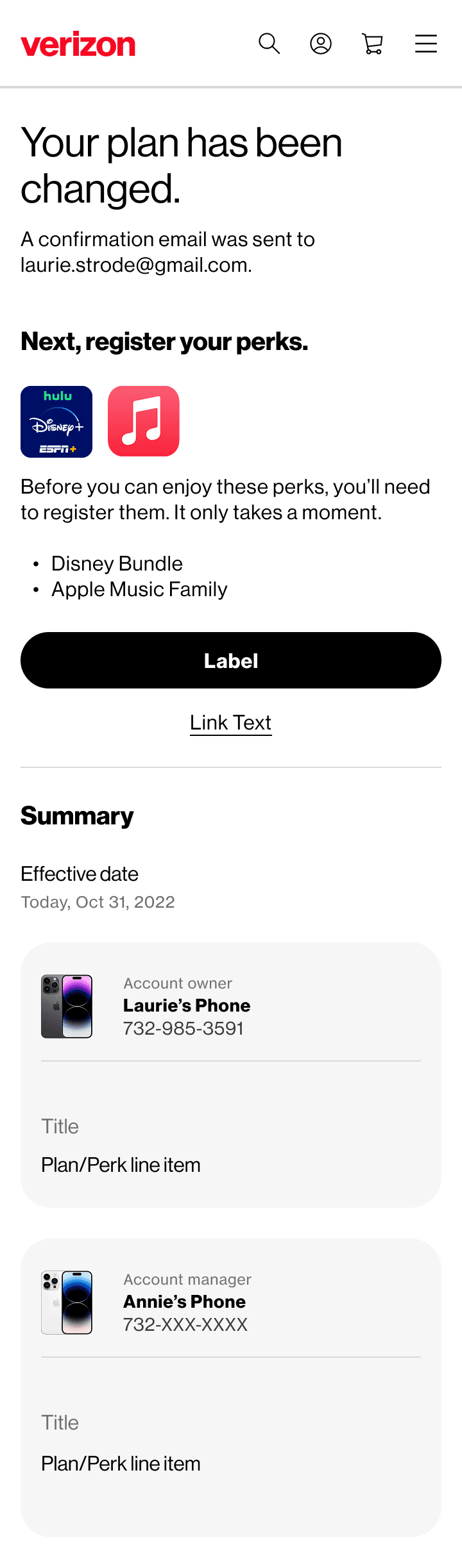
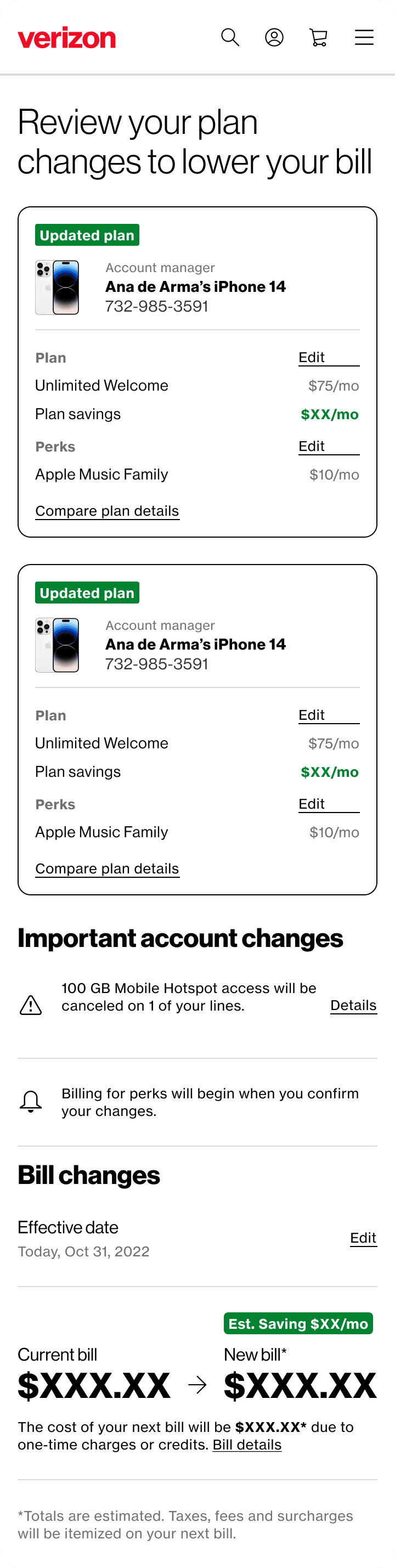
Verizon’s standard plan-change journey let customers browse plan options, explore perks, and review their changes before confirming. That structure worked for self-directed decisions, but Right Sizing had already completed the initial evaluation and generated a recommendation.
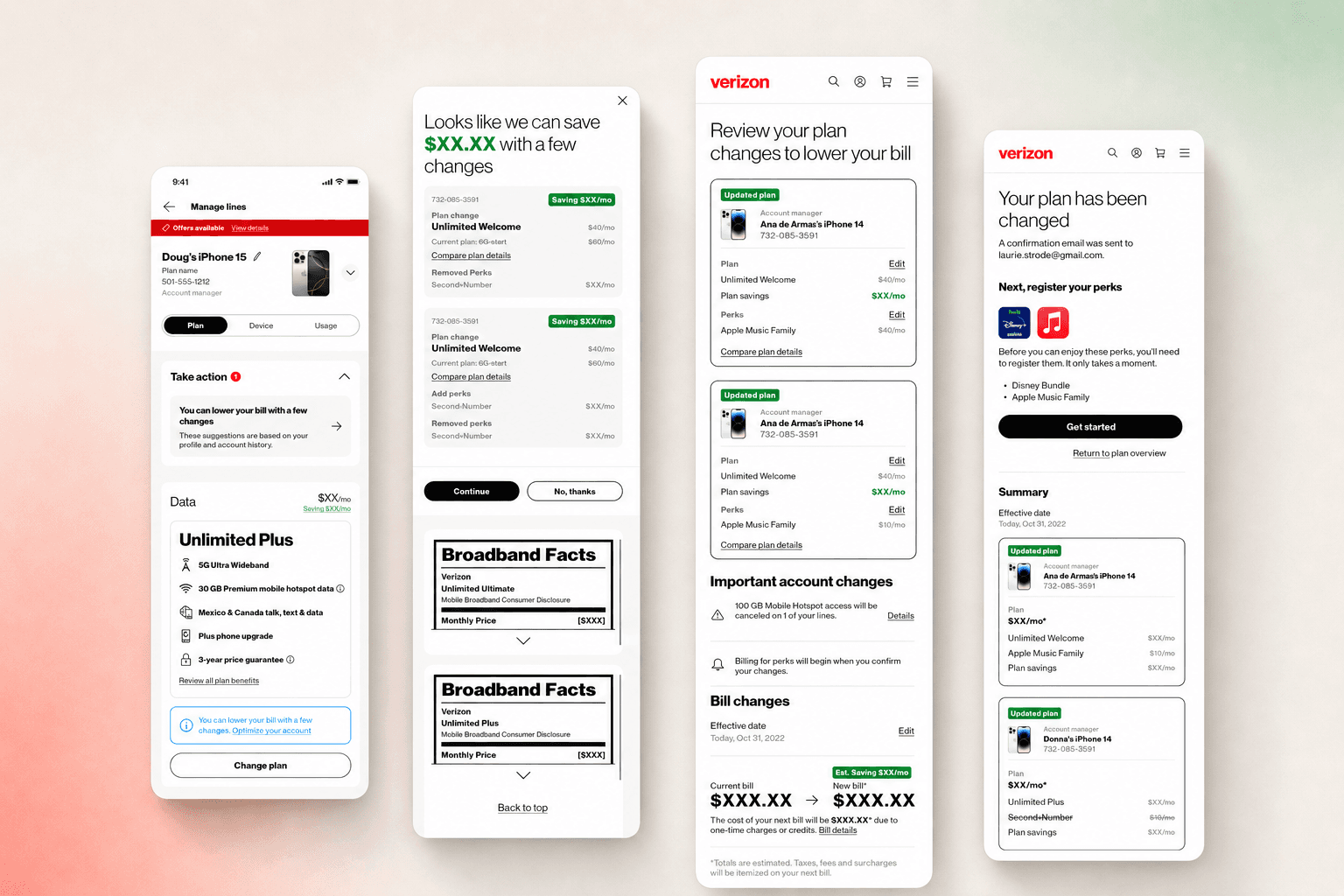
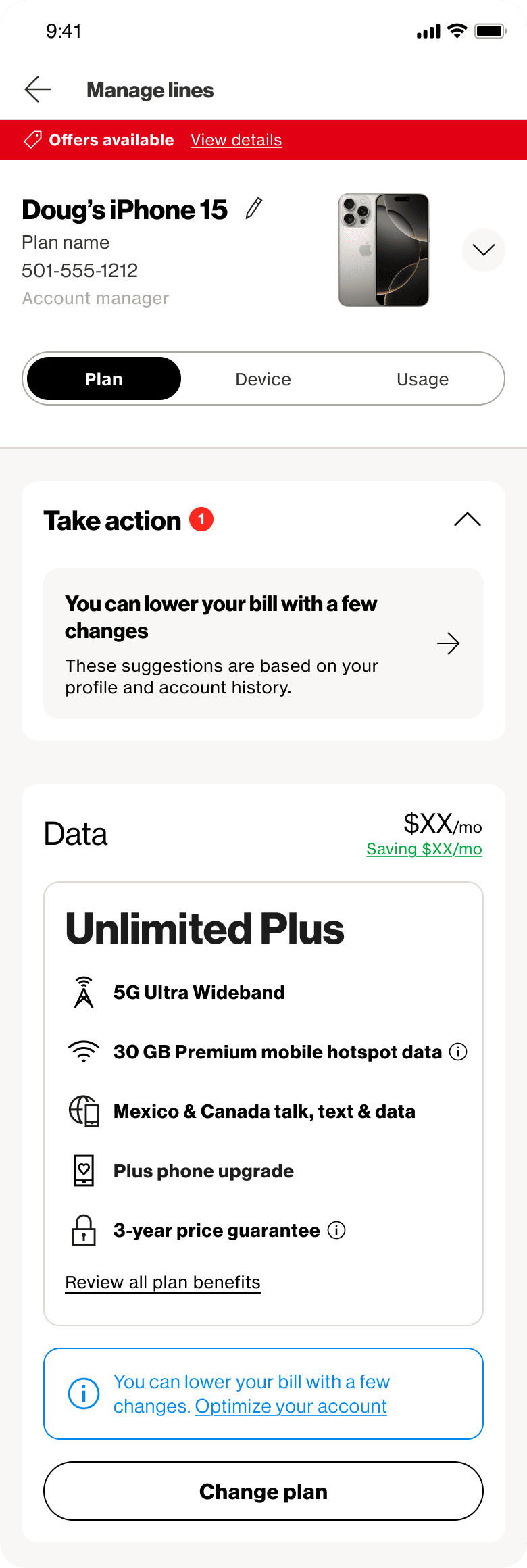
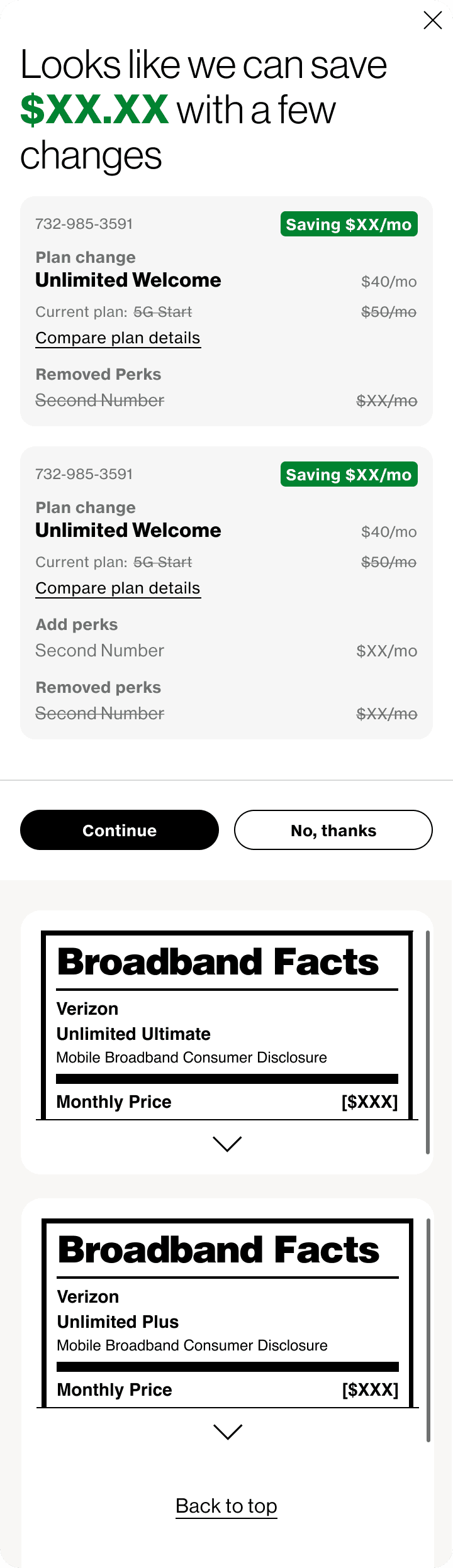
I reduced the journey to three steps: a savings entry point on the customer’s account dashboard, a direct recommendation screen, and the existing review-cart confirmation. Reusing the established confirmation step kept the experience consistent while making the recommendation the starting point.
The standard self-directed journey
Compressed to three steps
Core experience
Applying familiar patterns to personalized recommendations
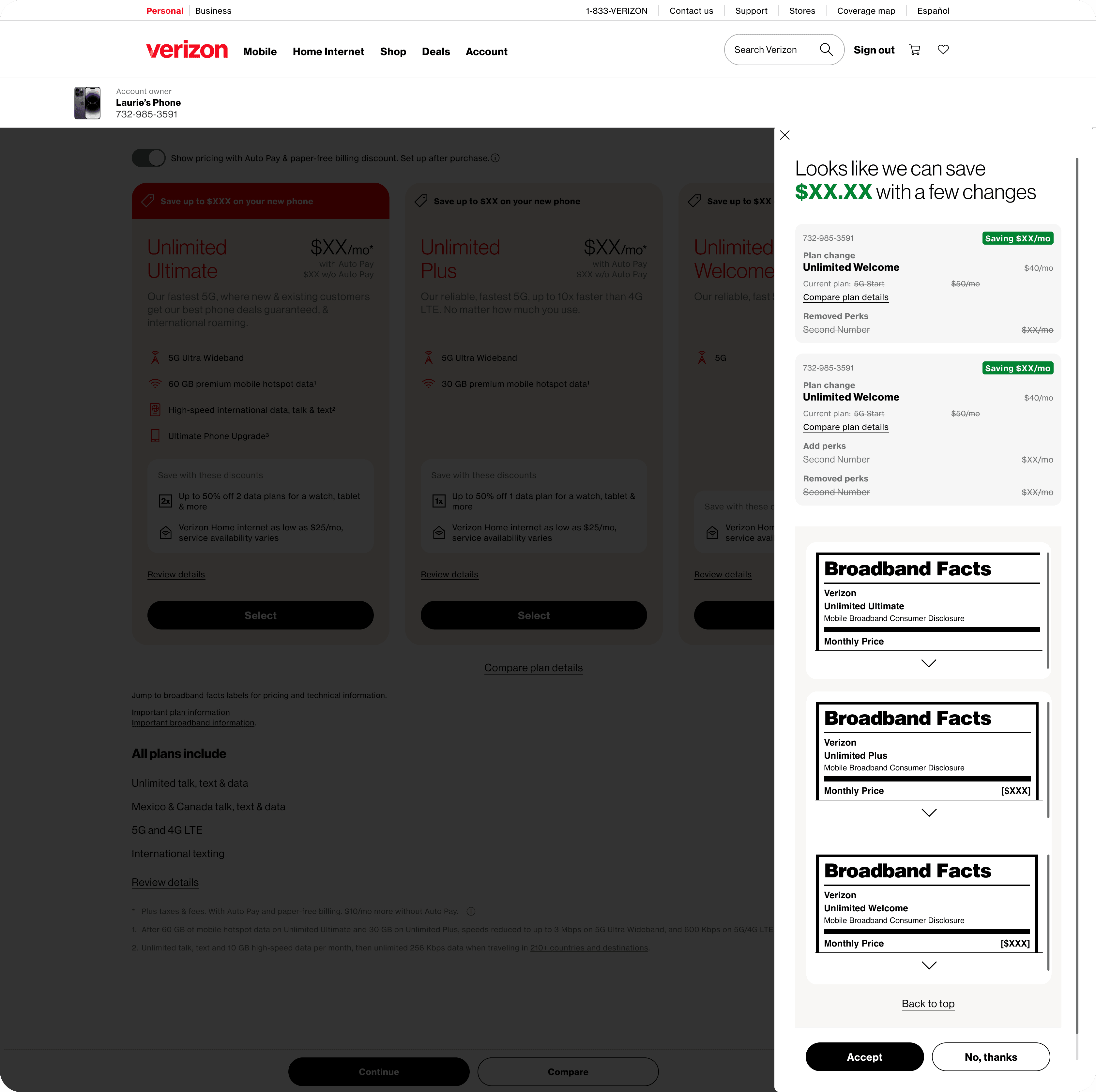
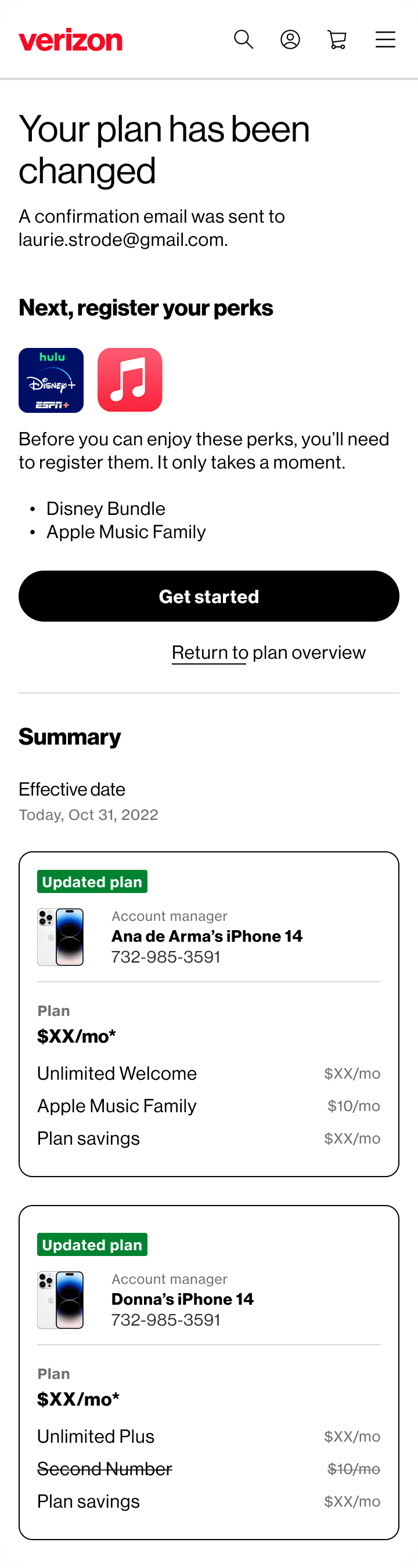
I reused established Verizon patterns rather than introducing new UI conventions. Strikeout formatting indicated items being removed from the account, while the product’s standard green treatment highlighted savings.
This made the recommendation easier to interpret and consistent with the existing plan-change experience.
Core experience
Creating a consistent framework for recommendation messaging
The proof-of-concept explanations were accurate but did not consistently reflect Verizon’s voice.
I partnered with the content strategist to create a shared reasoning framework: a structured matrix mapping system logic and customer signals to approved phrasing. This kept generated explanations consistent across recommendation scenarios.
What the data revealed
The pilot challenged the original savings hypothesis
The throttled launch revealed that many recommendations increased rather than lowered the customer’s bill. In these cases, the system identified accounts whose usage supported an upgrade to 5G Ultra Wideband or customers actively using a service that was not included in their plan. Right Sizing was therefore identifying value gaps in addition to savings opportunities.
This exposed a gap between the original design assumption and the recommendations the system was producing. The visual patterns and entry-point messaging had been designed around lowering the customer’s bill. The pilot showed that the experience also needed to explain the value of recommendations that increased cost. That scenario fell outside the initial project timeline, but the findings directly informed the team’s next initiative.
Outcome
Right Sizing shipped through a throttled launch, and its findings directly informed Value Builder, the team’s next initiative. Value Builder focused on helping customers understand and trust recommendations that might increase their monthly cost while better matching their actual usage.
Reflection
Reframing right-sizing around customer value
The pilot reframed the team’s definition of right-sizing. The goal was not only to lower monthly costs but to better align each customer’s plan with their actual usage—even when the recommendation involved paying more for services they were already using.